Track Geometry & Degradation Mechanics: Gauge, Cant, Twist, and Tamping Restoration

Maintaining pristine track geometry is the primary prerequisite for railway safety, passenger ride comfort, and the prevention of catastrophic high-speed derailments. Railway track is not a static civil monument; it is a flexible, dynamic mechanical system subjected to millions of cycles of multi-ton dynamic wheel impacts, lateral flange thrusts, thermal expansion cycles, and subgrade soil … Read more
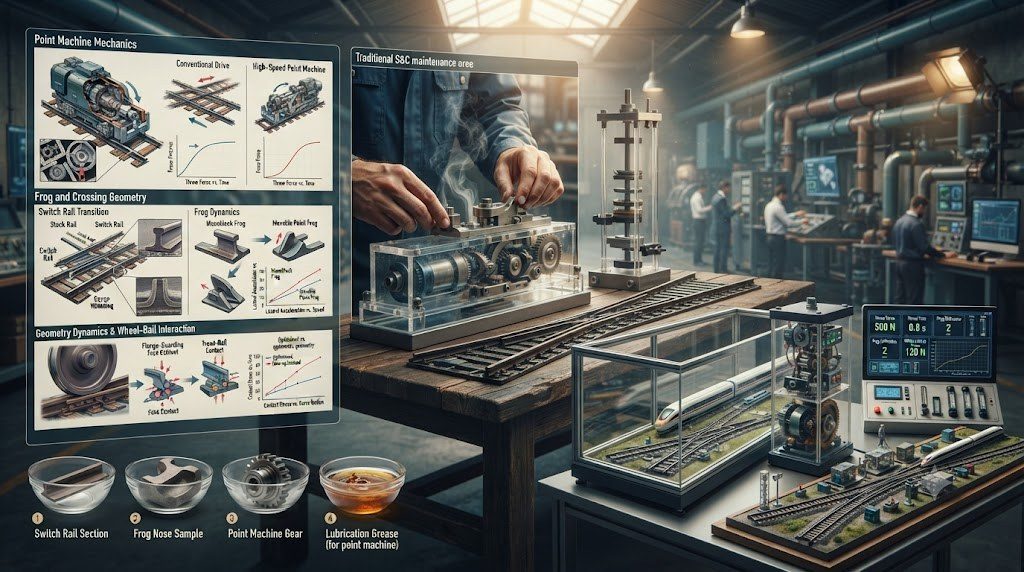
Turnouts, Switches, and Crossings (S&C): Point Machines, Frogs, and Geometry Dynamics

In railway network topology, trains do not possess steering wheels; their directional guidance is dictated entirely by track geometry. The specialized mechanical installations that permit trains to diverge, merge, or cross from one track to another without stopping are known as Turnouts, Switches, and Crossings (S&C). S&C installations represent the most geometrically complex, mechanically active, … Read more

Ballasted vs. Slab Track Formations: Geotechnical Subgrades and Load Dissipation

In railway civil engineering, the track structure must perform two vital physical functions: maintain uncompromising geometric alignment under dynamic wheelsets and safely dissipate hundreds of kiloNewtons of moving wheel loads down into the underlying subgrade earth without permanent plastic deformation. Globally, railway civil infrastructure is divided into two competing architectural philosophies: traditional ballasted track and … Read more

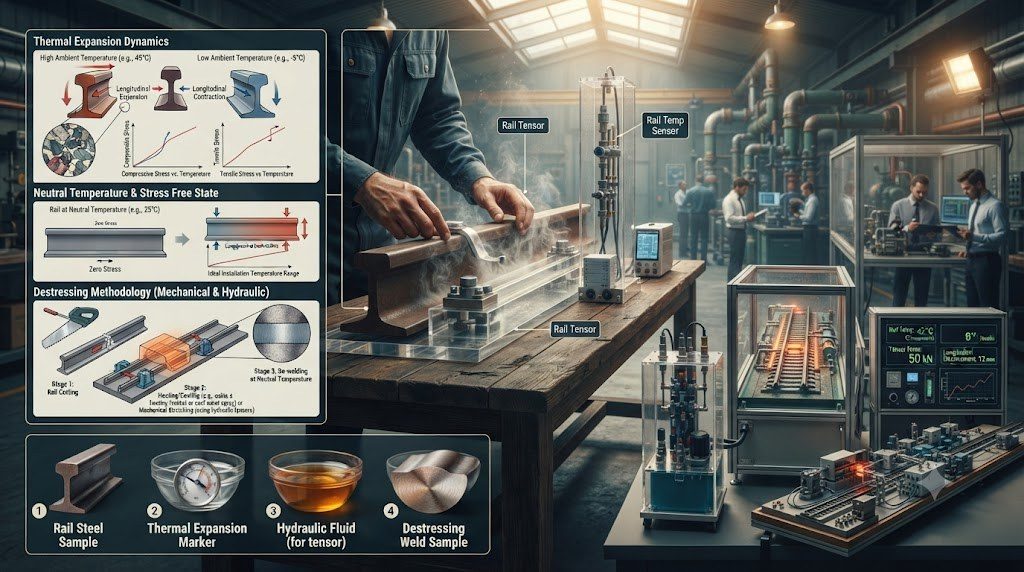
Continuous Welded Rail (CWR): Thermal Expansion, Neutral Temperature, and Destressing

In classical railway history, the rhythmic “clickety-clack” of steel wheels over rail joints was the signature acoustic accompaniment of train travel. In modern high-speed and heavy freight railway engineering, however, that sound has been completely engineered out of existence through the universal adoption of Continuous Welded Rail (CWR). Jointed track—where 12-to-25-meter rail sections were connected … Read more