Track Geometry & Degradation Mechanics: Gauge, Cant, Twist, and Tamping Restoration

Maintaining pristine track geometry is the primary prerequisite for railway safety, passenger ride comfort, and the prevention of catastrophic high-speed derailments. Railway track is not a static civil monument; it is a flexible, dynamic mechanical system subjected to millions of cycles of multi-ton dynamic wheel impacts, lateral flange thrusts, thermal expansion cycles, and subgrade soil … Read more

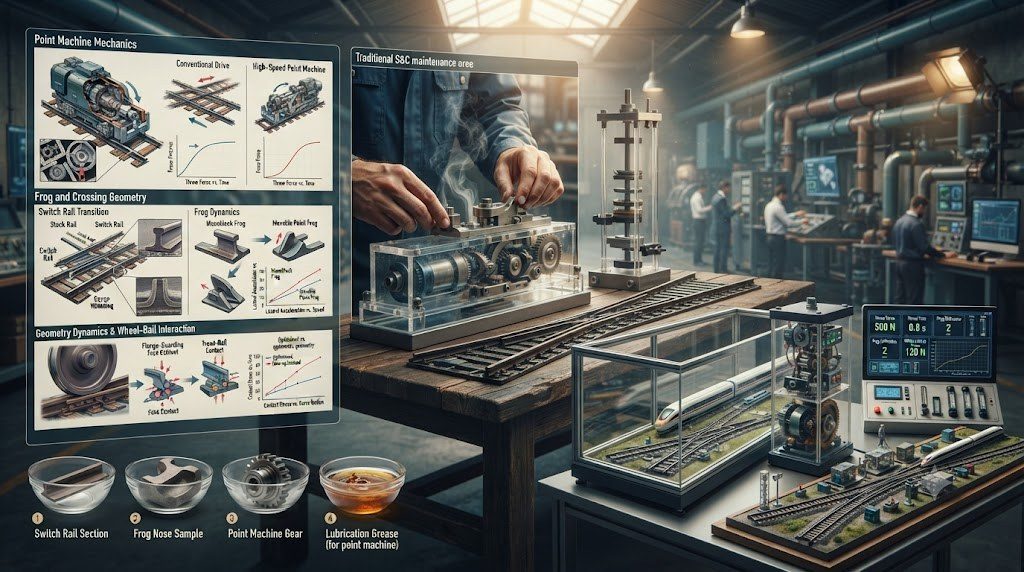
Turnouts, Switches, and Crossings (S&C): Point Machines, Frogs, and Geometry Dynamics

In railway network topology, trains do not possess steering wheels; their directional guidance is dictated entirely by track geometry. The specialized mechanical installations that permit trains to diverge, merge, or cross from one track to another without stopping are known as Turnouts, Switches, and Crossings (S&C). S&C installations represent the most geometrically complex, mechanically active, … Read more

Ballasted vs. Slab Track Formations: Geotechnical Subgrades and Load Dissipation

In railway civil engineering, the track structure must perform two vital physical functions: maintain uncompromising geometric alignment under dynamic wheelsets and safely dissipate hundreds of kiloNewtons of moving wheel loads down into the underlying subgrade earth without permanent plastic deformation. Globally, railway civil infrastructure is divided into two competing architectural philosophies: traditional ballasted track and … Read more

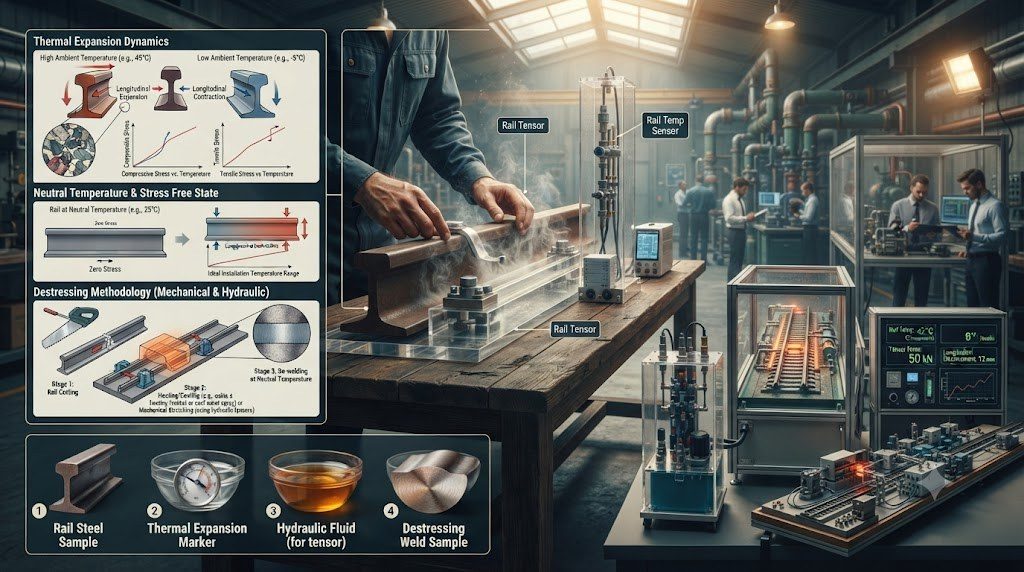
Continuous Welded Rail (CWR): Thermal Expansion, Neutral Temperature, and Destressing

In classical railway history, the rhythmic “clickety-clack” of steel wheels over rail joints was the signature acoustic accompaniment of train travel. In modern high-speed and heavy freight railway engineering, however, that sound has been completely engineered out of existence through the universal adoption of Continuous Welded Rail (CWR). Jointed track—where 12-to-25-meter rail sections were connected … Read more

Hydrogen Fuel Cell & Battery Hybrid Locomotives: Zero-Emission Heavy Haul

As the global transportation sector accelerates toward net-zero greenhouse gas emissions, railway operators face an acute infrastructure challenge: while high-traffic mainlines can be economically electrified with overhead catenary lines, thousands of kilometers of regional, rural, and heavy freight rail networks cannot economically justify multi-billion-dollar catenary installations. To eliminate fossil diesel emissions across non-electrified corridors, the … Read more

High-Speed Rail Rolling Stock: Aerodynamics, Distributed Traction, and Tilting Systems

Operating commercially at speeds between 250 and 350 km/h (155 to 217 mph), High-Speed Rail (HSR) rolling stock—exemplified by the Japanese Shinkansen, French TGV, German ICE, and Chinese CR400 Fuxing—represents the pinnacle of ground transportation engineering. At these velocities, physical rail engineering enters aerodynamic and dynamic regimes comparable to commercial aviation, demanding streamlined aerodynamic noses, … Read more

Electric Locomotives & Overhead Catenary: Pantograph Dynamics and Traction Converters

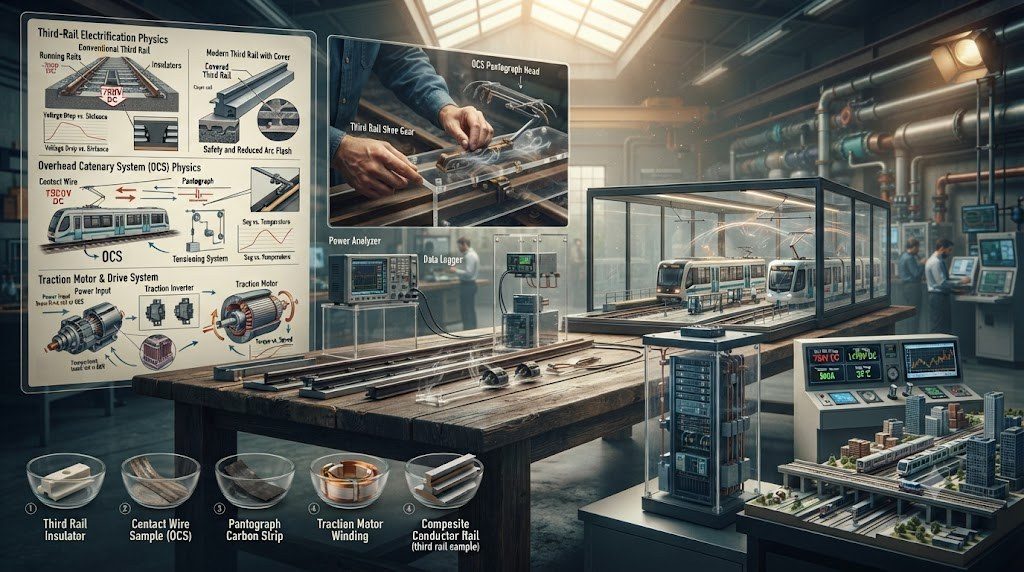
Where traffic density, passenger volume, and environmental mandates justify high capital infrastructure investment, electric locomotives represent the pinnacle of rail transport efficiency, raw power density, and environmental sustainability. By drawing continuous electrical energy from an external stationary grid via overhead catenary lines (OHE) or third-rail conductors, an electric locomotive eliminates the massive weight, volume, and … Read more

Diesel-Electric Locomotives: Prime Movers, Traction Alternators, and Inverter Drives

In global heavy freight logistics and non-electrified railway corridors, the diesel-electric locomotive remains the indispensable workhorse of long-distance transport. Unlike early direct-drive mechanical diesel attempts that suffered from catastrophic transmission clutch wear under immense starting loads, the modern diesel locomotive does not mechanically couple its diesel engine directly to the driving wheels. Instead, it functions … Read more

About AiRailTech

About AiRailTech

AiRailTech is your premier technical reference for high-speed rail engineering, locomotive traction dynamics, track superstructure design, and intelligent signaling infrastructure. We empower transit engineers, technicians, and railway professionals with rigorous, field-tested analysis.

Learn More →
Locomotive Dynamics Traction converters & motors
Track Superstructure CWR, ballast & slab tracks
Smart Signaling CBTC & ETCS Level 2 specs